How Commercial Casting Works in the UK: A Complete Guide for Brands
How Commercial Casting Works in the UK
Commercial casting can look straightforward from the outside.
A brand needs models. The creative team finds some suitable people, chooses who they like and books them for the shoot.
In reality, professional commercial casting is a much more structured process.
The brand or creative team needs to establish exactly what the campaign requires, communicate that through a clear casting brief, identify appropriate talent, review suitability, check availability, confirm the booking and make sure the chosen models are properly prepared for production.
The process can become even more detailed when a campaign involves multiple models, specific measurements, video, multiple locations, tight deadlines or broad usage requirements.
So, how does commercial casting work in the UK?
At a high level, the process usually looks like this:
Campaign brief → Casting requirements → Talent search → Shortlist → Availability → Selection → Booking → Pre-production → Shoot → Content usage
The exact process varies according to the agency, campaign and type of talent being booked, but this framework gives brands a practical understanding of what happens at each stage.
At Ms Curvaceous, we work with brands, retailers, agencies, photographers and creative teams looking to book professional plus size and curvy models for commercial campaigns, ecommerce, advertising, editorial projects, events and other professional productions.
What Is Commercial Casting?
Commercial casting is the process of identifying and selecting talent for commercial projects such as advertising, ecommerce, brand campaigns, promotional content, social media, lifestyle campaigns and other marketing productions.
Unlike a casting process focused purely on fashion or editorial aesthetics, commercial casting is usually driven by the requirements of the specific campaign.
The right model may need to be:
Visually appropriate for the brand
Relevant to the target audience
Comfortable in front of the camera
Suitable for the product
Available on the required dates
Appropriate for the campaign's creative direction
Able to meet relevant size or measurement requirements
Professionally prepared for the production
Commercial casting is therefore less about finding one universally "perfect" model and more about finding the right talent for a particular brief.
What Is the Difference Between Commercial Casting and Fashion Casting?
There can be overlap between commercial and fashion casting, but the objectives are often different.
Commercial casting
Commercial campaigns frequently prioritise qualities such as:
Relatability
Natural presence
Brand suitability
Audience connection
Product presentation
Professionalism
Ability to communicate a campaign message
Fashion casting
Fashion casting may place greater emphasis on:
Editorial appearance
Runway suitability
Specific proportions
Distinctive visual characteristics
Designer or creative direction
High-fashion presentation
Neither approach is inherently better.
The brief determines what the production needs.
A commercial fashion campaign may even require a combination of both commercial and fashion qualities.
The Commercial Casting Process in the UK
A professional casting process can generally be broken into several stages.
Stage 1: The Brand Creates a Casting Brief
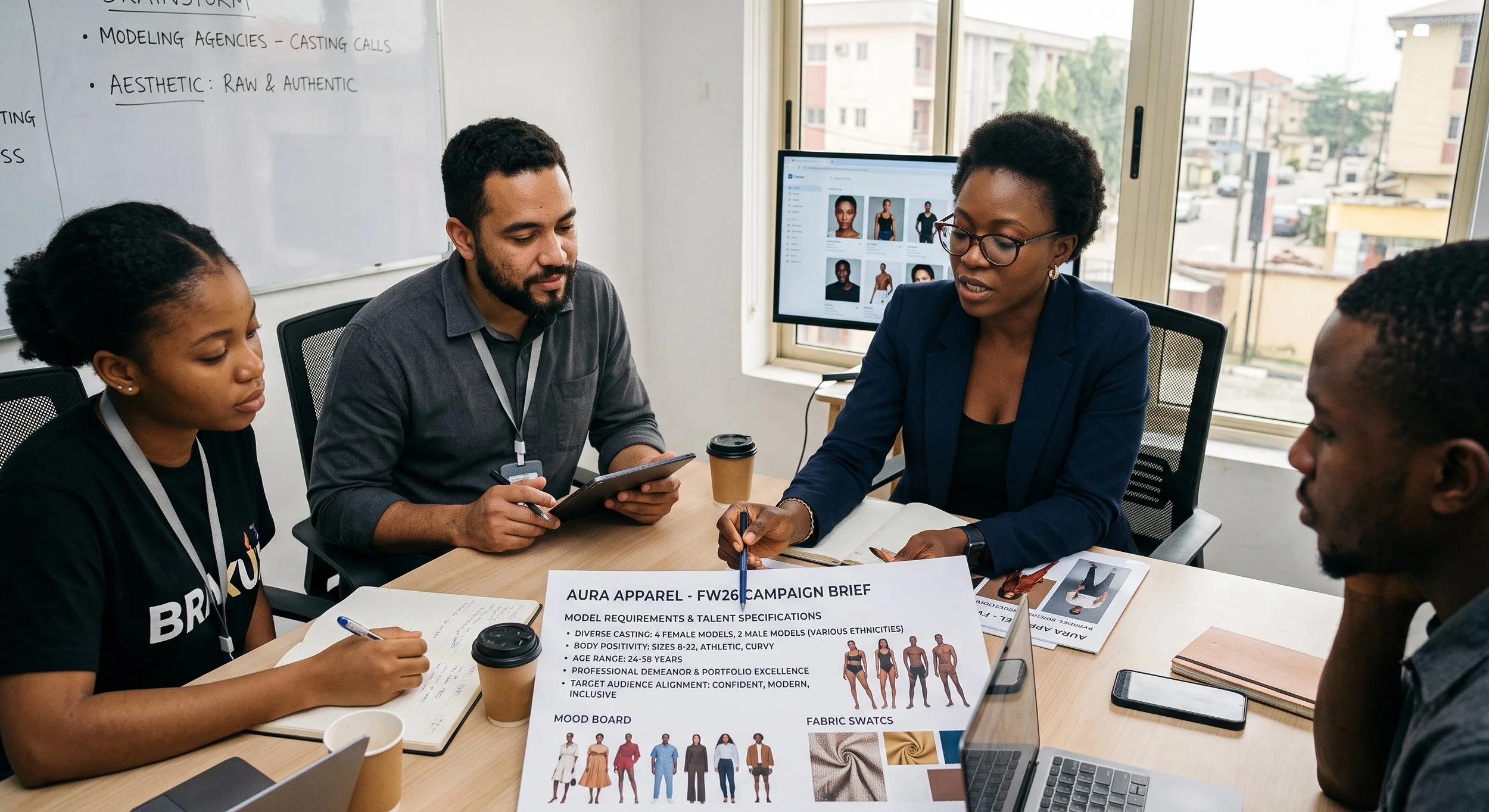
Everything begins with the brief.
A good casting brief tells the agency or casting professional what the campaign needs.
The brief can include:
Brand
Campaign type
Product
Target audience
Number of models
Gender requirements where relevant
Age range
Size or measurement requirements
Height requirements where relevant
Visual direction
Personality or character qualities
Shoot date
Location
Working hours
Content format
Usage
Budget parameters
Accessibility requirements where relevant
Any important production notes
A clear brief reduces unnecessary casting because it gives the talent team a defined set of requirements to work against.
Recent UK commercial casting guidance similarly emphasises providing the role, usage, shoot dates, location and fee information clearly before the casting process begins.
What Should Be Included in a UK Commercial Casting Brief?
A useful commercial casting brief should answer the questions a model or agency would need answered before deciding whether the opportunity is suitable.
1. What is the project?
Explain the campaign and what the talent will be doing.
For example:
Ecommerce shoot
Fashion campaign
Brand advertising
Social campaign
Video
Editorial
Event
Promotional content
2. Who is the brand?
Provide the brand name and enough context to understand the project.
3. Who is the target audience?
This can help determine the type of talent that makes sense for the campaign.
4. What type of model is required?
Be specific where the requirement genuinely matters.
This might include:
Size
Age range
Height
Location
Experience
Appearance
Lifestyle qualities
On-camera requirements
5. When and where is the shoot?
Include:
Date
Location
Call time where known
Expected duration
6. What will the content be used for?
Explain the intended media, territory and duration as clearly as possible.
Usage can affect commercial terms, so it should not be treated as an afterthought.
7. What are the booking parameters?
Provide the relevant fee indication, budget parameters or booking terms where appropriate.
The clearer the brief, the more efficiently suitable talent can be identified.
Stage 2: The Casting Team Reviews the Brief
Once the brief has been submitted, the agency, casting director or relevant talent team reviews the requirements.
The purpose is to understand what is genuinely essential.
For example, a campaign might require:
Non-negotiable
Plus size model
Specific clothing size
UK shoot
Fixed date
Commercial experience
Preferred
London-based
Comfortable with video
Lifestyle experience
Previous fashion campaign work
This distinction can be extremely useful.
It prevents the search from becoming unnecessarily narrow while keeping the important requirements intact.
Stage 3: Suitable Talent Is Identified
Once the brief is understood, the casting team searches for relevant talent.
This may involve reviewing:
Agency rosters
Existing talent boards
Model portfolios
Digitals
Previous commercial work
Relevant experience
Current availability
The purpose is not simply to find attractive or visually interesting people.
The purpose is to identify people whose profile aligns with the campaign.
Commercial casting can cover a broad range of ages, sizes, ethnicities and visual styles because the brief ultimately determines what the client needs.
Stage 4: Portfolios and Casting Materials Are Reviewed
The casting team reviews the available material for potential talent.
Depending on the project, this might include:
Portfolio images
Digitals
Video
Previous campaign work
Measurements
Relevant experience
Self-tape material
For commercial work, natural expression and the ability to communicate on camera can be important because many campaigns need talent to feel believable and relatable rather than simply visually striking.
Commercial agency guidance also highlights accurate measurements, natural expression, range and reliability as practical factors in commercial casting.
Stage 5: A Shortlist Is Created

The strongest candidates are then shortlisted.
A good shortlist should be relevant enough that the brand can make a meaningful decision.
It should not simply be a huge collection of names.
Depending on the project, the shortlist may contain:
Selected portfolio images
Digitals
Measurements
Location
Relevant experience
Availability information
Other useful casting details
The objective is to make the client's decision easier.
Stage 6: Availability Is Checked
A model can be perfect creatively and still be unsuitable if they are unavailable.
That is why availability should be checked before finalising the booking.
This becomes particularly important when the campaign has:
Fixed shoot dates
Product launch deadlines
Studio bookings
Travel
Multiple crew members
Several models
Time-sensitive advertising
For professional casting, creative suitability and practical availability need to be considered together.
Stage 7: The Client Selects the Preferred Talent
The brand or creative team reviews the shortlist and selects the preferred model or models.
The decision may consider:
Campaign fit
Brand fit
Audience fit
Portfolio
Experience
Measurements
Availability
On-camera suitability
Overall creative direction
For a group campaign, the team may also need to consider how the selected models work together.
The strongest individual model is not always the strongest choice for a particular campaign.
Stage 8: Options or Holds May Be Used
For some commercial productions, an agency or casting team may place a temporary hold on a model's availability while the client makes a final decision.
This is sometimes referred to as an option or pencil.
It is important to understand that an option is not necessarily the same as a confirmed booking.
The exact terminology and process vary between agencies and projects.
For UK commercial castings, industry guidance distinguishes between a shortlist/hold stage and the subsequent confirmed booking.
The practical takeaway for brands is simple:
Do not treat a temporary availability hold as the final booking until it has been confirmed.
Stage 9: The Booking Is Confirmed
Once the client has made the final decision and the relevant terms are agreed, the booking can be confirmed.
Depending on the assignment, this can include confirmation of:
Model
Date
Location
Call time
Working hours
Fee
Usage
Travel
Deliverables
Styling
Production requirements
Other agreed conditions
The goal is to remove uncertainty before the model arrives on set.
Stage 10: Usage Rights Are Confirmed
Usage is one of the most important commercial considerations in model casting.
A brand needs to understand how the photographs, video or other content featuring the model may be used.
This can include:
Website
Ecommerce
Organic social media
Paid digital advertising
Print
Editorial
Outdoor advertising
Packaging
Video
Other commercial channels
It can also involve:
Territory
Duration
Media
Exclusivity
Other agreed restrictions
Usage can affect commercial terms and should be addressed before production rather than assumed afterward.
For brands, this is one reason the statement “we already paid for the shoot” should not automatically be treated as meaning unlimited usage.
The actual rights depend on what was agreed for the booking.
Stage 11: Pre-Production Begins
Once the model is confirmed, the campaign moves into preparation.
The wider production team can finalise:
Wardrobe
Styling
Hair
Makeup
Products
Props
Location
Lighting
Shot list
Creative direction
Schedule
Call sheet
The model should also receive the information needed to prepare appropriately for the assignment.
This is where casting connects directly with production.
The model is no longer simply a shortlisted person.
They are now part of the confirmed campaign team.
Stage 12: The Model Is Briefed
A good model brief should make the job clear.
Depending on the project, the model may need information about:
Campaign concept
Brand
Location
Call time
Wardrobe
Hair and makeup
Product
Expected working hours
Posing or movement
Video requirements
Other talent involved
Key production instructions
This does not necessarily need to be a lengthy document.
It needs to be clear enough for the model to arrive prepared.
Stage 13: The Shoot Takes Place
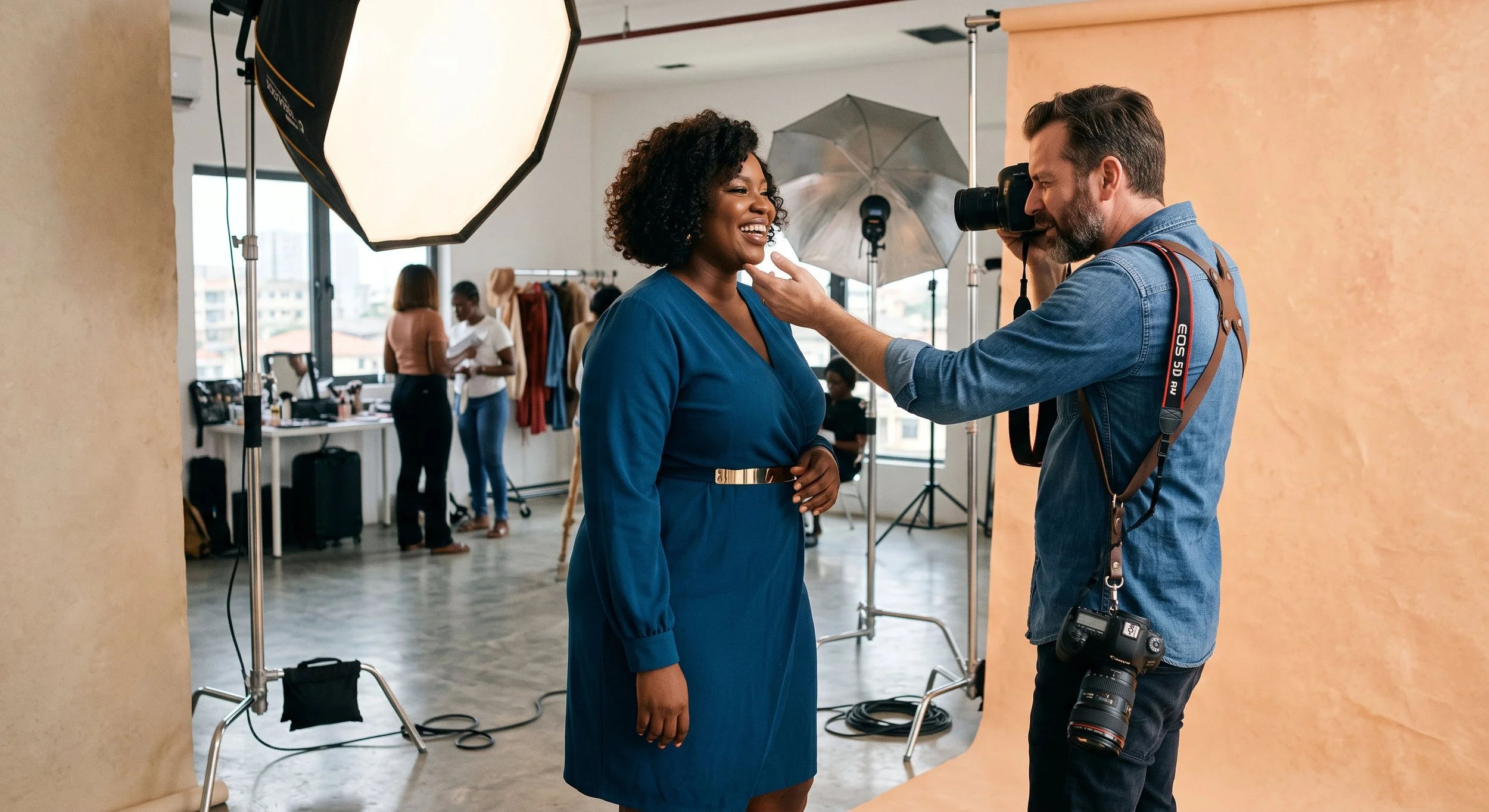
On the production day, the model works within the wider creative team.
Depending on the assignment, this might involve:
Photography
Video
Product demonstration
Lifestyle scenes
Multiple outfits
Multiple locations
Group scenes
Social content
Advertising assets
Commercial models may need to take direction, adapt to changes and maintain consistency across multiple shots.
Professionalism matters just as much as appearance.
Being on time, prepared and able to work effectively with the team contributes directly to a smoother production.
Stage 14: The Campaign Content Enters Post-Production
After the shoot, the creative team moves into post-production.
This may involve:
Image selection
Retouching
Editing
Colour correction
Video editing
Cropping
Graphic design
Asset creation
Approval
The final content is then prepared for the agreed campaign channels.
At this point, the model may no longer be actively involved, but the campaign assets continue to carry the agreed usage rights and restrictions.
What Is a Self-Tape in Commercial Casting?
Some commercial castings may ask talent to submit a self-tape.
A self-tape is a recorded audition or performance submitted digitally for the casting process.
Depending on the project, the brief may request:
A short introduction
Specific lines
A demonstration
Movement
Reactions
A particular scene
Other material relevant to the role
Not every commercial model booking requires a self-tape.
It depends on the campaign, role and casting process.
Where self-tapes are requested in UK commercial work, current practitioner guidance recommends giving talent a reasonable preparation window and making the brief clear before submissions are requested.
Do All Commercial Castings Require an In-Person Casting?
No.
The casting method depends on the project.
A client might select talent from:
Existing portfolio material
Digitals
Agency recommendations
Self-tapes
Video introductions
Virtual castings
In-person castings
Some straightforward model bookings may not require a formal audition at all.
A commercial fashion or advertising campaign with a more specific creative direction may involve a more detailed selection process.
The brief determines what is appropriate.
What Do Brands Look for in Commercial Models?
Commercial casting is not simply about conventional fashion-model characteristics.
Depending on the brief, brands may value:
Natural expression
The model needs to look believable on camera.
Audience connection
Can the intended customer see the person as relevant to the campaign?
Product suitability
Can the model present the product naturally?
Professionalism
Can they work effectively within a production environment?
Range
Can they adapt to different shots, expressions or directions?
Campaign fit
Does their overall presence work for the brand and creative concept?
The answer will vary by campaign.
There is no single "commercial model look".
The brief sets the requirements.
Is Commercial Casting Only for Fashion Brands?
No.
Commercial models can be booked for many types of organisations and productions, including:
Fashion brands
Clothing retailers
Beauty brands
Ecommerce businesses
Lifestyle companies
Hospitality brands
Technology companies
Financial services
Healthcare marketing
Advertising agencies
Creative agencies
Startups
Corporate campaigns
Events
Social media productions
The key factor is whether the project needs professional human talent to communicate a product, service, message or brand story.
Why Do Brands Use a Model Agency for Commercial Casting?
Brands can cast independently, but an agency can add structure to the process.
A professional agency may help with:
Interpreting the brief
Identifying relevant talent
Shortlisting models
Checking availability
Coordinating booking communication
Discussing relevant booking terms
Supporting production preparation
This can save the brand from having to search through a large volume of unsuitable talent independently.
It can be particularly useful when the requirements are specific or the production timeline is tight.
How Does Inclusive Commercial Casting Work?
Inclusive casting starts with the campaign rather than a generic idea of "diversity".
A brand should consider:
Who its customers are
Who is represented in the product range
Which audiences it wants to connect with
Which forms of representation are relevant to the campaign
For plus size fashion campaigns, that may mean casting professional plus size models as an integral part of the campaign rather than separating representation from the main creative concept.
Inclusive casting can involve considerations such as:
Body size
Age
Skin tone
Gender
Disability
Lifestyle
Other audience characteristics relevant to the campaign
The purpose is not to force every form of representation into every campaign.
It is to make casting more thoughtful and connected to the actual audience and brand.
What Should Brands Know About Commercial Casting Fees?
There is no single standard commercial casting fee.
Costs can depend on:
Number of models
Shoot duration
Type of production
Model experience
Usage
Territory
Duration of usage
Media
Travel
Additional requirements
Exclusivity
Other booking terms
This is why brands should provide as much relevant information as possible when requesting a quote.
A simple social-content shoot and a large advertising campaign are not equivalent bookings.
Usage is particularly important because the commercial value of the content can depend substantially on where, how broadly and for how long it will be used.
Why Usage Needs to Be Discussed Before the Shoot
Imagine a brand initially plans to use photographs on its website.
Several months later, the marketing team wants to use the same images in a major paid advertising campaign.
The original booking terms may not automatically cover that additional use.
This is why usage should be considered before production.
Brands should communicate intended:
Media
Territory
Duration
Campaign scope
Other relevant usage requirements
Clear agreements help avoid uncertainty later.
What Happens If the Client Changes the Brief?
Campaigns can evolve.
A client might:
Change the shoot date
Add another model
Expand the campaign
Change the location
Add video
Extend usage
Change the creative direction
When that happens, the relevant booking terms and agency process should be reviewed.
Do not assume that a change to the brief automatically falls within the original agreement.
Communicate changes early.
The earlier a change is known, the easier it generally is to determine what needs to be adjusted.
What Happens If the Model Is Unavailable?
Unexpected availability problems can happen.
If the originally selected model becomes unavailable, the relevant agency or casting team may need to identify an alternative.
This becomes easier when the original brief clearly distinguishes between:
Essential requirements
and
Preferred requirements
The replacement does not necessarily need to look exactly like the original model.
The important question is whether the alternative still satisfies the requirements that matter most to the campaign.
How Long Does Commercial Casting Take in the UK?
There is no universal commercial casting timeline.
A straightforward booking with a flexible brief can move quickly.
A large advertising campaign can take significantly longer because of:
Multiple approvals
Multiple models
Self-tapes
Recalls
Client decisions
Production schedules
Usage negotiations
Contracts
Travel
Detailed creative direction
For that reason, brands should start casting as early as practical.
A clear brief also speeds up the process because suitable talent can be assessed against defined requirements instead of vague preferences.
How Early Should a Brand Start Commercial Casting?
Start as early as the production schedule allows.
Early casting gives the brand more time to:
Develop the shortlist
Check availability
Compare talent
Resolve practical issues
Confirm usage
Organise wardrobe
Finalise production
Consider alternatives
This becomes especially important for campaigns with fixed launch dates or specific model requirements.
Casting should be treated as part of production planning, not something to leave until the final days before the shoot.
Commercial Casting Checklist for UK Brands
Before starting the casting process, make sure you have:
Campaign
Campaign objective
Brand information
Product information
Target audience
Creative direction
Talent
Number of models required
Size requirements
Age range where relevant
Height requirements where relevant
Experience requirements
Other relevant casting criteria
Production
Shoot date
Location
Call time
Expected duration
Photography/video requirements
Wardrobe requirements
Styling requirements
Usage
Media
Territory
Duration
Campaign scope
Any exclusivity requirements
Commercial
Budget parameters
Fee requirements
Travel requirements
Other booking terms
The clearer these details are, the easier it is to run an efficient casting process.
Commercial Casting vs Model Booking: What's the Difference?
These terms are related but describe different stages.
Commercial casting is primarily the process of finding and selecting the right talent.
Model booking is the process of formally confirming the selected talent for the assignment.
In simple terms:
Casting answers:
“Which model is right for this campaign?”
Booking answers:
“Can we confirm this model for the campaign under the agreed terms?”
The two processes often sit closely together, particularly when an agency is involved.
How Ms Curvaceous Supports Commercial Model Casting
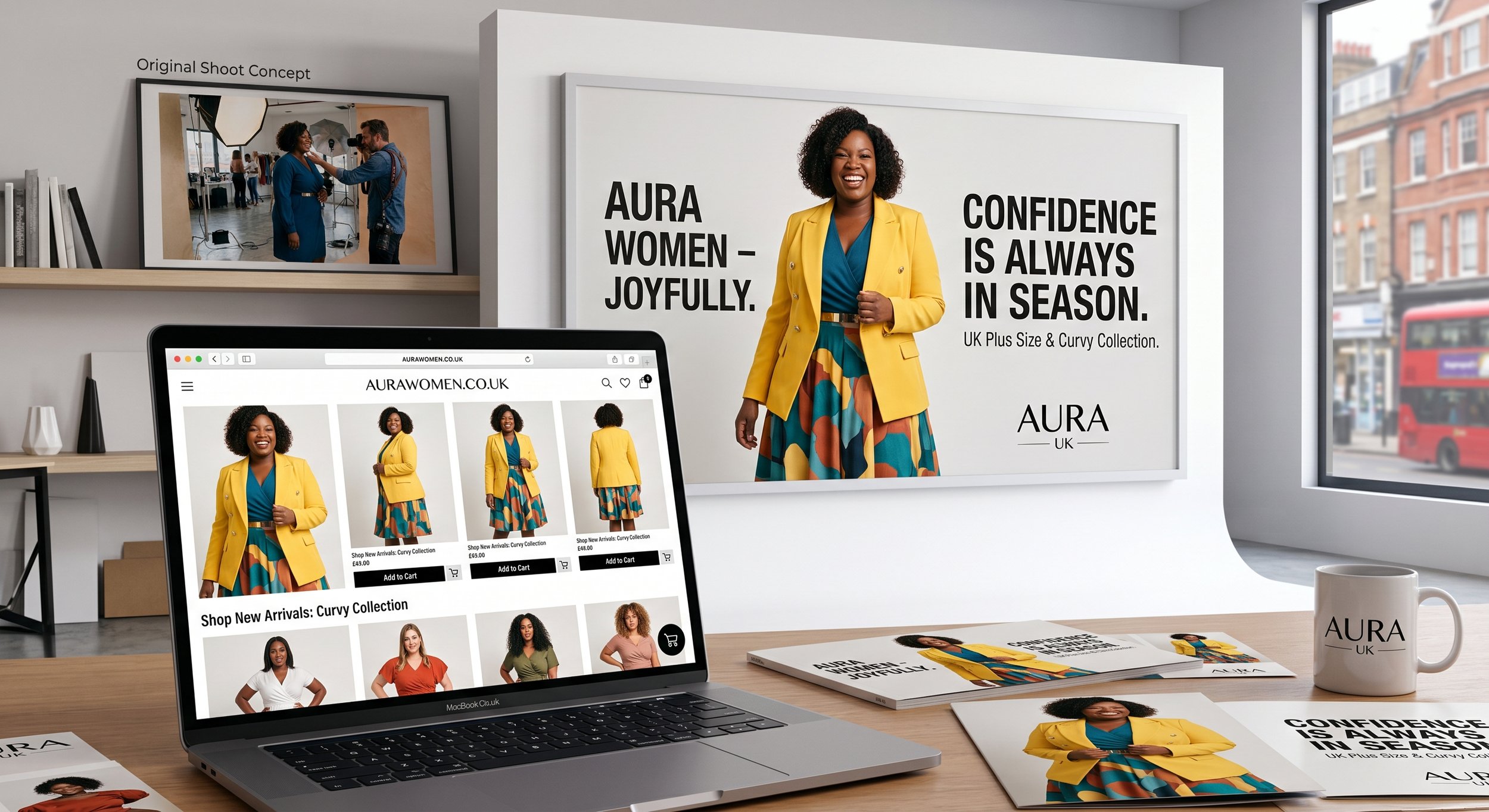
Ms Curvaceous works with brands, retailers, agencies, photographers and creative teams looking for professional plus size and curvy models for commercial projects.
The process starts with the campaign brief.
Brands can provide information such as:
Campaign type
Product
Shoot date
Location
Model requirements
Content requirements
Other relevant production details
The aim is to identify professional talent that fits the campaign rather than simply presenting a large, unfiltered list of models.
Our models can be considered for:
Fashion campaigns
Ecommerce photography
Commercial advertising
Editorial projects
Social content
Brand campaigns
Runway
Events
Promotional productions
You can view professional plus size models available for booking, learn more about our plus size model agency in the UK, or submit a model booking enquiry.
A Simple Commercial Casting Timeline
1. Campaign brief
The brand defines what the production needs.
↓
2. Casting search
Suitable professional talent is identified.
↓
3. Shortlist
Relevant models are presented for consideration.
↓
4. Availability
Dates and practical requirements are checked.
↓
5. Client selection
The brand chooses the preferred model or models.
↓
6. Booking confirmation
Fees, usage and production details are confirmed.
↓
7. Pre-production
Wardrobe, styling, schedule and creative direction are finalised.
↓
8. Shoot
The selected models work with the production team.
↓
9. Post-production
Images and/or video are edited and prepared.
↓
10. Campaign usage
The finished content is used across the agreed channels and within the agreed usage terms.
Frequently Asked Questions
What is commercial casting?
Commercial casting is the process of finding and selecting talent for commercial projects such as advertising, ecommerce, brand campaigns, social content, lifestyle marketing and other productions.
How does commercial casting work in the UK?
A typical UK commercial casting process starts with a clear brief, followed by talent identification, portfolio or casting review, shortlisting, availability checks, client selection, booking confirmation, pre-production and the final shoot. The exact process varies by project and agency.
What should a commercial casting brief include?
A strong brief should include the campaign, brand, product, target audience, model requirements, shoot dates, location, content requirements, usage information and relevant booking or budget parameters.
Do commercial castings require auditions?
Not always. A client may select talent from existing portfolio material or an agency recommendation, while other projects may use self-tapes, video submissions, virtual castings or in-person castings.
What do brands look for in commercial models?
It depends on the brief, but brands may consider natural expression, audience relevance, product suitability, professional experience, ability to take direction, availability and overall campaign fit.
What is the difference between commercial casting and fashion casting?
Commercial casting generally focuses on talent that fits a particular brand, audience and campaign objective, while fashion casting can place greater emphasis on editorial or runway requirements. There can be considerable overlap between the two.
Can plus size models be included in commercial casting?
Yes. Plus size models can be cast for commercial campaigns including fashion, ecommerce, advertising, lifestyle, editorial and social content.
Do brands choose the model or does the agency choose?
The agency or casting team may recommend and shortlist suitable talent, but the client or brand generally makes the final selection according to the booking arrangement.
What are model usage rights?
Usage rights define how the images, video or other content featuring a model may be used. Relevant factors can include media, territory, duration and other agreed restrictions.
How long does UK commercial casting take?
There is no fixed timeline. Simple bookings can move quickly, while larger campaigns may require more time for shortlisting, self-tapes, recalls, client approvals, negotiations and production planning.
When should a brand start casting models?
As early as practical, especially when the campaign has fixed dates, specific requirements, multiple models or significant production commitments.
Can a model agency help with commercial casting?
Yes. Depending on the service provided, an agency can help interpret the brief, identify suitable talent, create a shortlist, check availability and coordinate elements of the booking process.
Final Thoughts
Commercial casting is fundamentally about finding the right talent for the right campaign.
That sounds simple, but the details matter.
A strong casting process starts with a clear brief, considers the needs of the audience and brand, identifies relevant talent, checks availability, confirms the booking and makes sure the model understands the production before the shoot.
For brands, the goal is not simply to find a model who looks good.
The goal is to find professional talent who can contribute to the campaign's creative and commercial objective.
That is especially important when a campaign involves specific requirements such as plus size representation, ecommerce production, video, multiple models or fixed deadlines.
At Ms Curvaceous, we help brands and creative teams access professional plus size and curvy models for commercial work across the UK.
View Professional Plus Size Models