How Agencies Match Models to Brands: What the Casting Process Really Looks Like
How Agencies Match Models to Brands: What the Casting Process Really Looks Like
Finding the right model for a campaign is about much more than choosing someone who looks good in a photograph.
A model may have the right look but not the right experience for a particular campaign. Another may fit the brand perfectly but not be available on the required dates. Someone else may have the right measurements, personality and portfolio but not be the best fit for the creative direction.
That is where a professional model agency can make the booking process considerably easier.
A good agency takes the information provided by a brand or creative team, understands what the campaign is trying to achieve, then identifies models whose experience, appearance, availability and professional suitability align with the brief.
For brands looking to book professional models in the UK, the objective is not simply to find a model. It is to find the right model for the job.
At Ms Curvaceous, we work with brands, retailers, agencies, photographers and production teams looking to book professional plus size and curvy models for commercial campaigns, ecommerce, advertising, editorial projects, runway events and other professional work.
Here is how the matching process works.
What Does a Model Agency Actually Match?
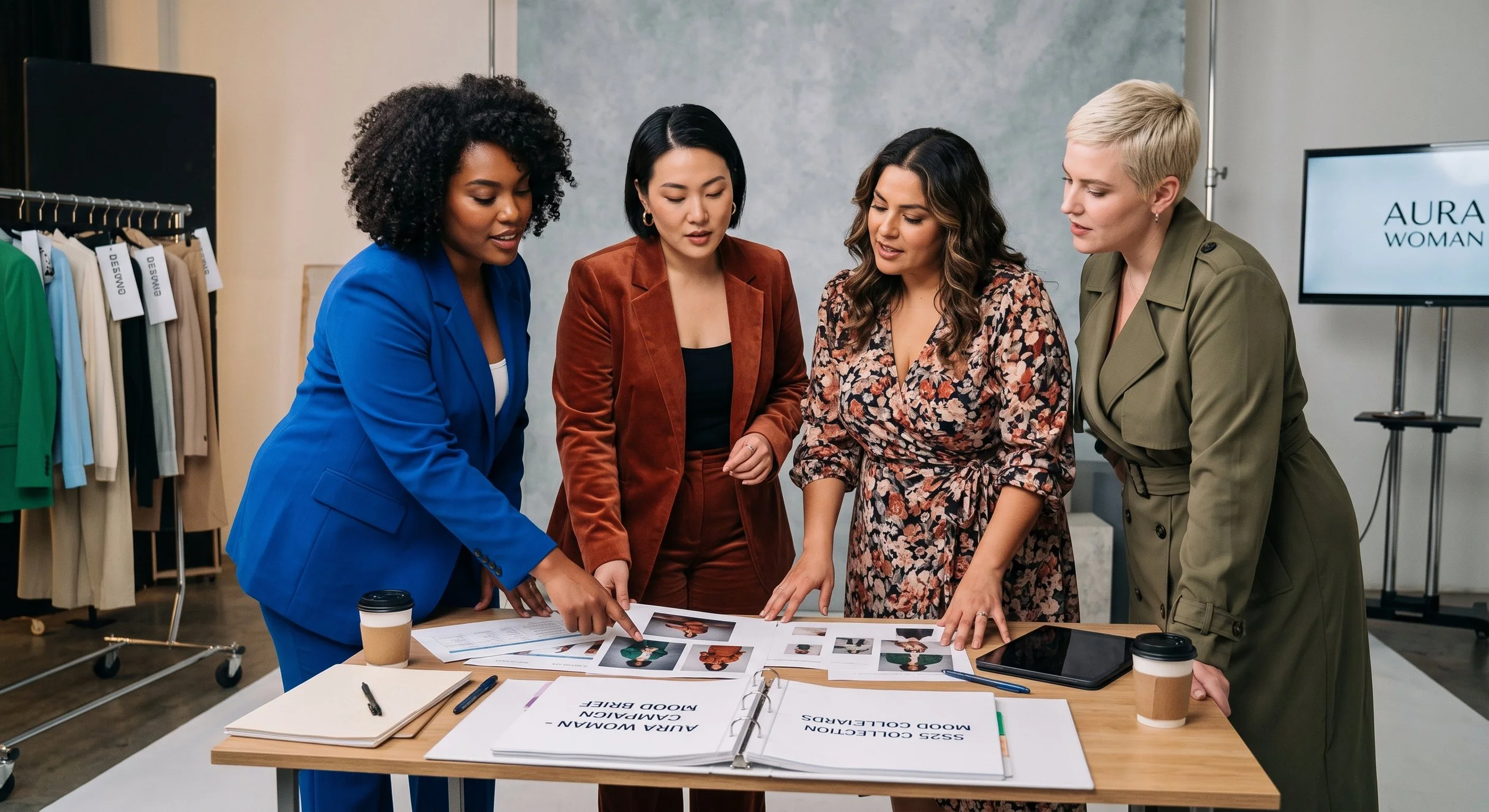
When a brand approaches an agency, the agency is usually trying to match several different requirements at the same time.
These can include:
The overall look and feel of the campaign
Target customer or audience
Clothing or product requirements
Model size and measurements
Age range
Location
Model experience
Personality and on-camera presence
Type of shoot
Campaign dates
Usage requirements
Budget
Creative direction
The strongest match is therefore not necessarily the model with the largest portfolio or most followers.
It is the model who makes sense for the specific brief.
For example, an ecommerce brand may need a model who can confidently present multiple outfits and products across a full day of studio photography.
A fashion campaign may require a particular visual style, attitude or presence.
A lifestyle campaign may need someone who feels natural and relatable on camera.
A runway production will have completely different requirements again.
The job of an agency is to understand those differences and recommend talent accordingly.
Step 1: The Brand Sends a Model Brief
The matching process starts with the brief.
A professional agency needs enough information to understand what the brand is actually trying to produce.
A useful model brief might include:
Campaign type
Brand name
Product or collection
Shoot date
Location
Number of models required
Preferred age range
Clothing size
Height requirements where relevant
Creative direction
Required experience
Image or video deliverables
Expected working hours
Usage requirements
Budget or booking parameters
The more specific the brief, the easier it becomes to identify suitable talent.
This does not mean a brand needs to know exactly which model it wants before contacting an agency.
In fact, that is often where the agency adds value.
A brand can explain the outcome it wants, and the agency can help translate that requirement into a suitable talent shortlist.
For brands preparing a campaign, our Fashion Campaign Planning Checklist can also help organise the important information before models are booked.
Step 2: The Agency Understands the Brand and Campaign
Matching models is not purely a technical exercise.
The agency also needs to understand the brand.
Two companies may both need a plus size model for an ecommerce shoot but have completely different audiences, aesthetics and creative goals.
A premium fashion label may want a polished editorial feel.
A high-street retailer may be looking for relatable commercial imagery.
A beauty company may need a model who can communicate strongly through close-up photography and video.
A lifestyle campaign may place greater emphasis on personality and natural interaction.
Understanding the brand helps the agency avoid making recommendations based on appearance alone.
The question becomes:
Who is the right model for this brand, this audience and this campaign?
That is a much more useful question than simply asking which models are available.
Step 3: The Agency Reviews Suitable Talent
Once the brief is understood, the agency reviews its available talent.
This is where the agency's knowledge of its roster becomes valuable.
The team can consider factors such as:
Experience
Has the model worked on similar types of assignments?
A model with commercial ecommerce experience may be particularly suitable for a retailer's product shoot, while a model with strong runway experience may be more appropriate for a fashion show.
Appearance and brand fit
Does the model's overall look fit the visual direction of the campaign?
This includes more than physical appearance. Styling, presence, energy and the way the model presents themselves can all affect the final result.
Size and measurements
For fashion and ecommerce work, accurate measurements can be important because garments need to fit correctly and consistently.
Personality and presence
Some campaigns require a model who can deliver a strong editorial expression.
Others need warmth, energy or a natural lifestyle presence.
Availability
A model may be an excellent creative fit but unavailable on the required production dates.
Availability therefore becomes part of the matching process.
Location
Where the shoot is taking place can also affect suitability.
A UK-based campaign may benefit from locally available talent, particularly when the production schedule is tight.
The objective is to narrow down the options without losing sight of the original brief.
Step 4: Models Are Shortlisted for the Brief

After reviewing the available talent, the agency can create a shortlist.
The shortlist should be based on fit, rather than simply presenting a large number of names.
A useful shortlist gives the brand a manageable selection of models who genuinely suit the assignment.
Depending on the booking, the agency may consider:
Portfolio
Previous commercial experience
Relevant campaign experience
Measurements
Location
Availability
Personality
Campaign suitability
Other specific requirements from the brief
This saves the brand from having to manually review a large roster without context.
For a busy marketing team or creative agency, that can make a significant difference to the booking process.
Step 5: Availability Is Checked
Creative suitability is only part of the equation.
The model also needs to be available.
Once a shortlist has been identified, availability can be checked against the proposed:
Shoot date
Shoot duration
Location
Call time
Travel requirements
Related production commitments
This is particularly important for campaigns working to fixed production schedules.
A model might be an excellent match in every other respect, but if they cannot attend the shoot, the agency needs to identify an appropriate alternative.
This is one reason working with an agency can be more efficient than contacting a long list of individual models separately.
Step 6: The Brand Reviews the Recommended Models
Once suitable models have been identified, the brand or creative team reviews the recommendations.
At this stage, the brand may assess:
Portfolio imagery
Previous work
Visual suitability
Overall campaign fit
Personal presence
Size and measurements
Availability
Location
Budget
Any specific production requirements
The creative team can then decide which model or combination of models best supports the campaign.
Sometimes the right answer is obvious.
Other times, the agency may need to discuss alternatives or refine the shortlist.
That is normal.
Model casting is often a collaborative process between the agency and the client.
Step 7: The Booking Details Are Confirmed
Once the brand has selected the preferred talent, the practical details need to be confirmed.
Depending on the assignment, this can include:
Date
Location
Hours
Fee
Usage requirements
Deliverables
Travel arrangements
Production details
Call time
Contact information
Any specific requirements relating to the campaign
Clear communication at this stage is important because everyone involved should understand what has been agreed before production begins.
For brands, the goal is a straightforward transition from casting to confirmed booking.
Step 8: The Agency Supports Communication and Logistics
The agency's role does not necessarily end when a model has been selected.
Professional booking support can involve keeping communication organised between the relevant parties and helping ensure the agreed details are understood.
That may include coordinating information about the schedule, confirming arrangements and helping resolve practical questions before the shoot.
The exact level of support depends on the booking and the agency involved.
For a creative team already managing photographers, stylists, producers, locations and deliverables, having a clear model-booking process can remove another layer of unnecessary administration.
What Makes a Model the Right Fit for a Brand?
There is no single definition of the "perfect" model.
The right choice depends on the campaign.
A useful way to think about model suitability is to look at five areas.
1. Visual Fit
Does the model work naturally with the campaign's creative direction?
2. Audience Fit
Can the model authentically represent the customers the brand is trying to reach?
3. Commercial Fit
Does the model have the type of experience needed for the assignment?
4. Practical Fit
Are the location, availability, measurements and other requirements suitable?
5. Professional Fit
Can the model work effectively within the production environment and meet the expectations of the project?
The best booking is where these factors come together.
Why Brands Use Agencies Instead of Finding Models Themselves
Brands can, of course, discover models through social media, casting platforms, referrals and other channels.
The challenge is what happens after discovery.
A large pool of possible talent can create more work rather than less.
Someone still needs to:
Review portfolios
Compare suitability
Check measurements
Check availability
Establish the booking requirements
Communicate with talent
Confirm terms
Coordinate the booking
A specialist agency can help centralise much of this process.
For brands that regularly produce campaigns, ecommerce content or commercial advertising, that can make model sourcing more structured and efficient.
The value is not simply access to models.
It is access to suitable talent through a more organised booking process.
Why Matching Matters for Plus Size and Inclusive Campaigns
Representation works best when it feels considered rather than added as an afterthought.
For brands creating inclusive campaigns, model selection should reflect the actual purpose of the campaign.
That can involve considering:
The customer the brand is speaking to
The products being presented
The campaign's creative direction
Different body types and appearances
The overall visual identity
How the models work together within the campaign
For example, a retailer launching an extended-size collection may need models who can present the garments naturally across ecommerce imagery, advertising and social content.
A brand campaign may require a broader group of models who collectively represent its audience.
A runway event has different requirements again.
This is why an agency that understands both commercial modelling and inclusive representation can be useful to brands that want the casting process to support the wider campaign strategy.
How to Give an Agency a Better Model Brief
Brands do not need to write a complicated document.
A clear brief is more valuable than a long one.
At minimum, include:
Campaign
What are you creating and what is it for?
Product
What will the model be wearing, using or presenting?
Audience
Who is the campaign intended to reach?
Date and location
When and where will the production take place?
Talent requirements
Are there specific size, age, height, gender, appearance or experience requirements?
Deliverables
Will the models appear in photography, video, ecommerce content, advertising, social media or multiple formats?
Usage
Where and for how long will the resulting content be used?
Budget
What booking parameters should the agency work within?
The more clearly these elements are communicated, the easier it is for an agency to make useful recommendations.
When Should Brands Contact a Model Agency?
As early as possible.
Waiting until the final stages of production can unnecessarily reduce the available options, particularly when the campaign has fixed dates or specific requirements.
Early contact gives the agency more opportunity to:
Understand the brief
Review suitable talent
Check availability
Present alternatives
Coordinate booking details
Support the wider production schedule
For larger campaigns, model casting should be considered part of the initial production planning rather than something added at the end.
What Happens If the First Choice Is Unavailable?
A good casting process should not depend entirely on one model.
That is why having a clear brief matters.
When the agency understands what is genuinely important to the campaign, it can recommend alternatives that meet the core requirements even when the original choice is unavailable.
For example, the alternative may differ in appearance while still matching the required:
Size
Experience
Campaign style
Location
Availability
Commercial suitability
The objective is not to find an identical replacement.
It is to find another model who can fulfil the purpose of the brief.

How Ms Curvaceous Helps Brands Find the Right Models
At Ms Curvaceous, the booking process is designed around the brand's requirements rather than simply presenting a list of talent.
Brands, retailers, agencies, photographers and production teams can submit a project brief including information such as the campaign type, dates, location and requirements.
The team can then review suitable professional plus size and curvy models based on the project.
Our models are available for a range of professional assignments, including:
Fashion campaigns
Ecommerce photography
Commercial advertising
Editorial projects
Runway shows
Brand events
Social content
Promotional campaigns
You can view our professional plus size models to explore the available roster, or learn more about our plus size model agency in the UK.
When you already know what you need, you can book a plus size model through Ms Curvaceous and submit your project details for consideration.
Frequently Asked Questions
How do model agencies match models to brands?
Agencies typically review the client's campaign brief and consider factors such as the creative direction, audience, model requirements, experience, measurements, location and availability before recommending suitable talent.
What information should a brand give a modelling agency?
A useful brief should include the campaign type, product, target audience, date, location, model requirements, deliverables, usage expectations and relevant booking or budget information.
Do agencies choose models based only on appearance?
No. Appearance is only one part of the decision. Experience, suitability for the campaign, availability, measurements, professional requirements and the brand's overall creative direction can also influence the recommendation.
Can a modelling agency recommend more than one model?
Yes. Depending on the brief, an agency may recommend a shortlist of suitable models so the client can compare options and select the best fit for the campaign.
When should I book a model for a campaign?
It is generally better to start the process early, particularly when the campaign has fixed production dates, multiple models or specific requirements. Early planning gives more opportunity to check availability and consider suitable alternatives.
Can brands book plus size models for ecommerce and advertising campaigns?
Yes. Plus size models can be booked for a wide range of professional assignments, including ecommerce photography, fashion campaigns, advertising, editorial work, social content and events.
Final Thoughts
The best model booking decisions rarely come down to appearance alone.
A strong match happens when the model fits the creative direction, audience, product, practical requirements and commercial purpose of the campaign.
That is why the agency-client relationship matters.
When a brand provides a clear brief and an agency understands what the campaign needs to achieve, the casting process becomes much more focused. Instead of searching through endless profiles, the brand can review talent that has already been considered against the requirements of the project.
For brands looking to hire professional plus size and curvy models in the UK, Ms Curvaceous provides a direct route from campaign brief to model booking.
View Professional Plus Size Models
Learn About Our Plus Size Model Agency UK
Book a Model for Your Campaign
Ready to Find the Right Model for Your Campaign?
Tell Ms Curvaceous what you are creating, where and when you are shooting, and what kind of talent you need. Our team can help you identify suitable professional plus size and curvy models for your project.