What Happens After You Book a Model? A Brand’s Guide to the Booking Process
What Happens After You Book a Model?
Booking the right model is an important part of putting a campaign together, but the booking itself is not the end of the process.
Once the model has been selected and the booking is confirmed, there are usually several practical steps still to complete before the shoot takes place.
Dates and timings need to be confirmed. The model needs the right information about the job. The creative team may need to finalise styling and production details. Usage requirements may need to be agreed. And on the day itself, everyone involved needs to know where they need to be, when they need to arrive and what is expected.
So, what actually happens after you book a model?
In most professional bookings, the process moves from:
Model selection → Booking confirmation → Pre-production → Shoot day → Post-production and usage
The exact process varies depending on the agency, campaign and booking, but understanding the usual sequence makes it much easier for brands and creative teams to plan properly.
At Ms Curvaceous, we work with brands, retailers, agencies, photographers and production teams looking to book professional plus size and curvy models for commercial campaigns, ecommerce, advertising, editorial projects, runway shows, events and other professional assignments.
Here is what brands should expect after booking.
What Happens Immediately After Booking a Model?
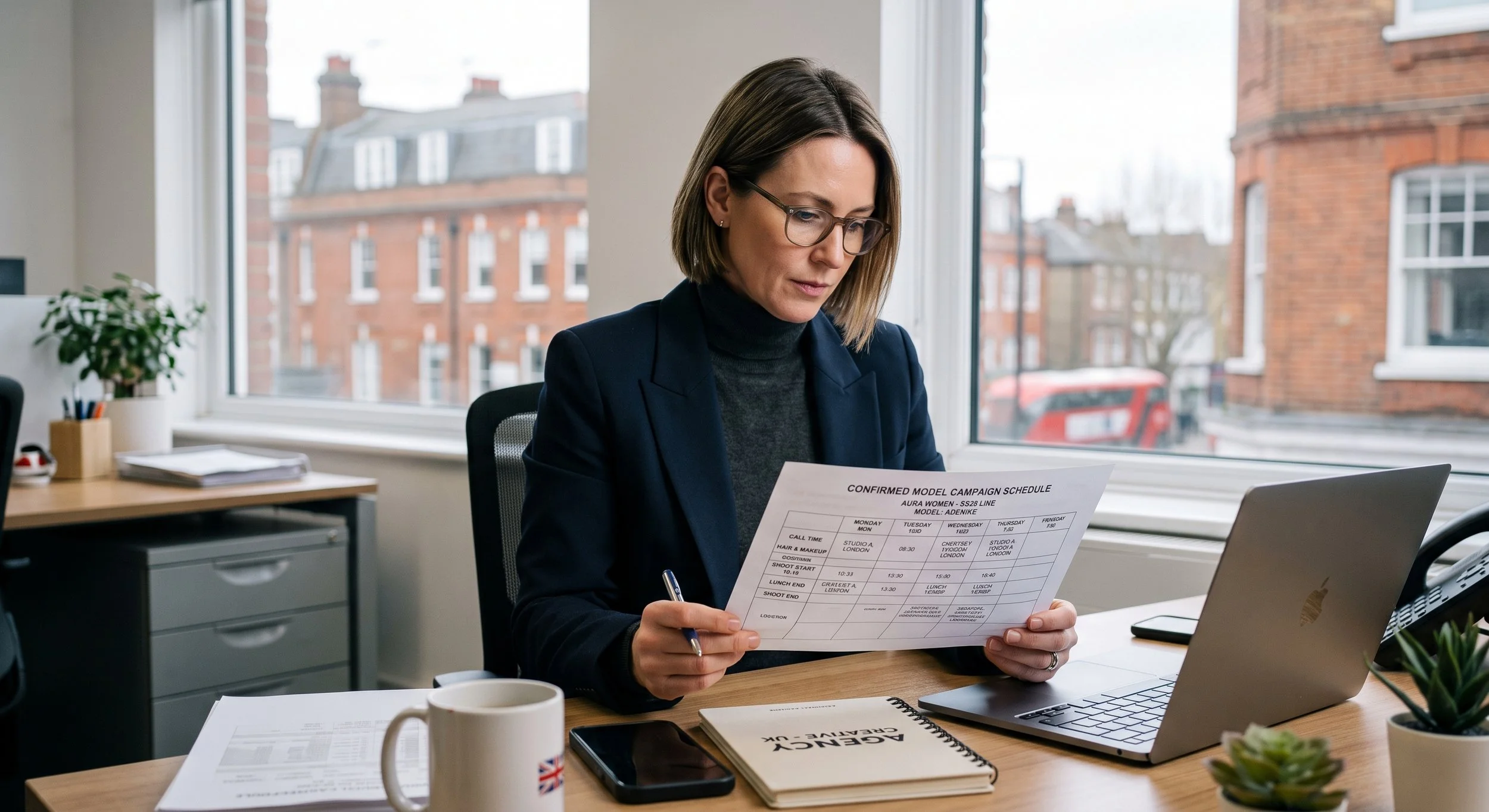
Once the preferred model has been selected, the first priority is to make sure the booking details are clear.
Depending on the assignment, this can include confirming:
The model selected
Booking date
Shoot location
Call time
Expected working hours
Campaign or project
Fee or booking terms
Travel arrangements
Usage requirements
Content deliverables
Styling requirements
Production contact
Any specific instructions
This confirmation stage is important because a model cannot prepare properly for a booking if key information is still unclear.
The more organised the confirmation process is, the less likely it is that misunderstandings will happen later.
Step 1: The Booking Details Are Confirmed
After the model has been chosen, the brand and relevant representatives need to confirm the practical details of the assignment.
The exact information will depend on the booking, but a professional booking may require confirmation of:
Date
When is the model required?
Location
Where is the shoot, event or production taking place?
Call time
What time should the model arrive?
Duration
How long is the booking expected to last?
Type of work
Is the model being booked for:
Ecommerce
Fashion photography
Advertising
Editorial
Video
Social content
Runway
Events
Promotional work
Another commercial assignment?
Usage
Where will the resulting content be used?
For example, the content could be intended for:
Website
Ecommerce
Social media
Digital advertising
Print
Outdoor advertising
Editorial
Other agreed marketing channels
These details should be understood before production begins.
Step 2: The Model Receives the Relevant Information
Once the booking has been confirmed, the model needs enough information to prepare for the assignment.
A model should not have to arrive at a professional shoot with no understanding of what is expected.
Depending on the project, useful information can include:
Call time
Location
Parking or access information
Contact person
What to bring
Clothing requirements
Styling instructions
Hair and makeup arrangements
Expected duration
Campaign concept
Products involved
Any specific poses or movement requirements
Production notes
The level of detail will vary from one booking to another.
A simple ecommerce shoot may require different preparation from a full advertising campaign involving photography and video.
The key principle is straightforward:
Everyone should know what they are turning up to do.
Step 3: The Brand Finalises the Pre-Production Details
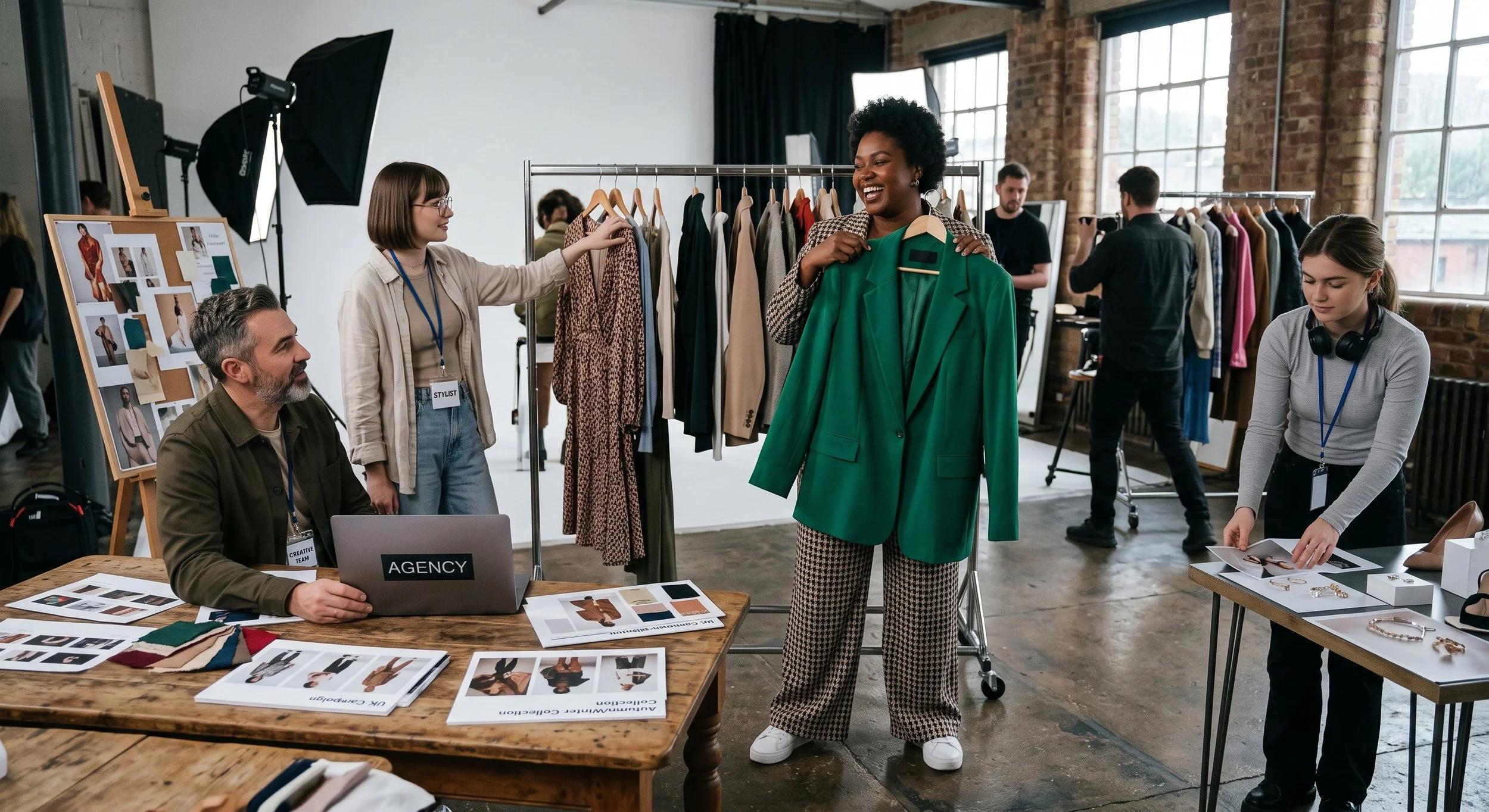
The model booking is only one part of campaign production.
The brand or creative team will usually continue preparing the rest of the shoot.
That might involve coordinating:
Photographer
Videographer
Creative director
Art director
Stylist
Hair and makeup team
Producer
Location
Studio
Lighting
Props
Clothing
Products
Shot list
Call sheet
Production schedule
For a larger campaign, this can involve several people and moving parts.
The model needs to fit into that production plan rather than being treated as a separate task.
This is one reason it is useful to book talent early enough for the creative team to finalise the production around confirmed availability.
Step 4: Wardrobe and Styling Are Confirmed
For fashion and ecommerce campaigns, clothing preparation can be particularly important.
The brand or stylist may need to confirm:
Garments
Sizes
Outfit combinations
Accessories
Shoes
Styling direction
Number of looks
Changes required during the shoot
This can become especially important when the campaign involves size-specific products.
The model may need to know whether clothing is being provided on the day, sent in advance, brought by the stylist or sourced through another arrangement.
The objective is to make sure the garments, styling and model work together as intended.
Step 5: The Creative Brief Is Finalised
The model should also understand the creative context of the assignment.
That does not necessarily mean receiving a long document.
A concise creative brief can be enough.
It may explain:
The campaign concept
Brand tone
Desired mood
Visual references
Products being featured
Required expressions
Posing direction
Key shots
Video requirements
Any important do's and don'ts
For example, a premium fashion campaign may require a controlled editorial style.
An ecommerce shoot may focus more heavily on product presentation and consistency.
A lifestyle campaign may require natural interaction and movement.
The clearer the creative direction, the easier it is for the model and production team to work towards the same result.
Step 6: The Shoot Day Arrives
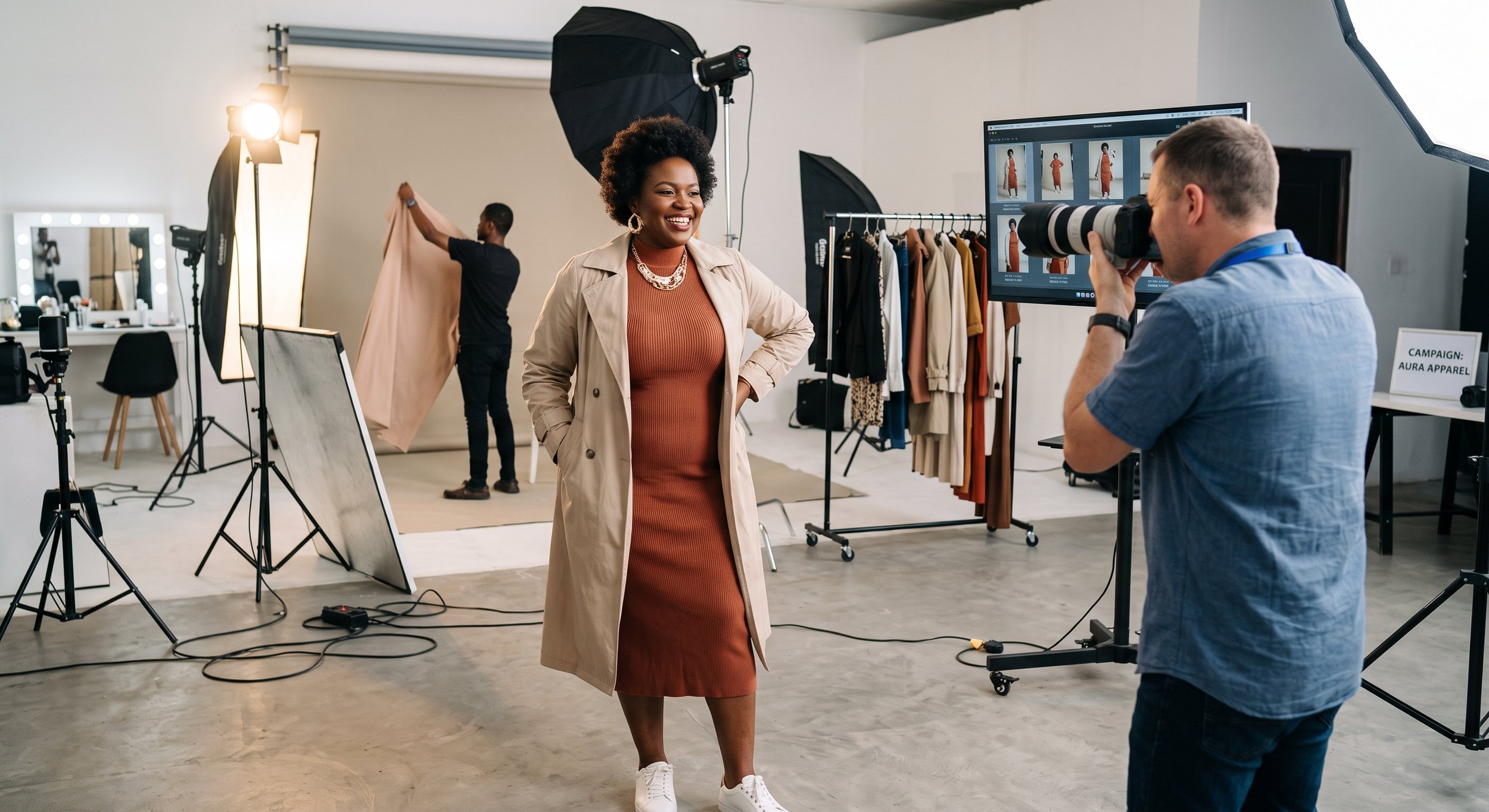
On the day of the booking, the model normally arrives at the agreed location at the specified call time.
What happens next depends on the production.
A typical shoot may involve:
Arrival → Check-in → Hair/Makeup → Styling → Briefing → Shooting → Breaks → Outfit Changes → Final Shots → Wrap
This does not mean every booking follows this exact sequence.
Some assignments are simple.
Others involve a full production crew and several stages.
But the principle remains the same: the model becomes part of the production workflow.
What Should a Model Expect on Shoot Day?
A professional model may be asked to:
Follow direction from the photographer or creative team
Change outfits
Maintain poses
Move between locations or set areas
Present products naturally
Participate in video
Work with other models
Repeat poses or movements
Adapt to creative changes
Work within the production schedule
The model's professional role is therefore more than simply standing in front of a camera.
The quality of the final campaign often depends on how well the model, photographer, stylist and creative team work together.
Step 7: The Model Works With the Creative Team
Good commercial shoots are collaborative.
The photographer may direct positioning or expression.
The stylist may make adjustments between shots.
The creative director may refine the visual direction.
The producer may manage timing.
The model needs to respond to those instructions while maintaining professional consistency.
For brands, this is another reason professional casting matters.
A model may look perfect on a portfolio but still need to demonstrate the right professional qualities in a live production environment.
The best outcome comes when the chosen talent is both visually suitable and professionally prepared for the assignment.
Step 8: Additional Content May Be Created
The original booking may cover more than still photography.
Depending on the campaign, the production could also include:
Short-form video
Social media content
Behind-the-scenes footage
Product demonstrations
Reels
Paid advertising creatives
Motion content
Interviews
Lifestyle footage
This needs to be considered before the shoot, especially where usage and deliverables differ between formats.
A campaign that includes both photography and video may require different preparation from a straightforward ecommerce shoot.
That is why brands should be clear about the intended content when making the booking.
Step 9: The Brand Checks the Final Content
After the shoot, the work does not necessarily go directly live.
The brand may need to review and select the final material.
Depending on the production, this can include:
Image selection
Retouching
Colour correction
Editing
Video editing
Cropping
Graphic design
Final approval
Asset formatting
Platform-specific versions
The model's role may have finished once the agreed shoot has been completed, but the resulting content can continue to be used according to the agreed usage terms.
This makes it important for the brand to understand how the content is going to be used before the booking is finalised.
What Happens With Model Usage Rights After the Shoot?
One of the most important considerations for brands is usage.
Booking a model and deciding how the resulting images or video may be used are related, but they are not necessarily the same thing.
The agreed usage can determine where and for how long campaign material featuring the model may be used.
Depending on the assignment, the brand may need to consider:
Website usage
Ecommerce usage
Organic social media
Paid advertising
Print
Editorial
Outdoor advertising
Promotional materials
Campaign duration
Geographic scope
Other agreed uses
The exact terms depend on the booking agreement.
Brands should therefore make sure usage requirements are discussed clearly before production rather than assuming every possible use is automatically included.
For more on this subject, see our guide to Model Release Forms and Usage Rights Explained for Brands.
What Happens If the Brand Wants to Use the Images Later?
This is one of the reasons usage should be considered from the beginning.
A brand may initially plan to use campaign images on its website and social channels, then later decide to use the same assets in paid advertising or another campaign.
Whether that is permitted depends on the terms agreed for the original booking.
The safest approach is to define anticipated usage as clearly as possible at the beginning.
If requirements change later, the brand can address those changes through the appropriate commercial process rather than making assumptions.
What Happens If the Shoot Date Changes?
Production schedules can change.
Locations may become unavailable.
Products can be delayed.
Weather can affect outdoor shoots.
Campaign timelines can move.
If a booking needs to change, the brand should communicate with the relevant agency or representative as early as possible.
The impact of a date change can depend on:
Model availability
New production dates
Travel arrangements
Location
Other bookings
Contractual terms
Additional costs
This is another reason early communication is important.
Last-minute changes can create problems when multiple people and suppliers are already working to a fixed schedule.
What If the Model Becomes Unavailable?
Unexpected situations can happen.
If the originally selected model can no longer attend, the agency or booking contact may need to identify a suitable alternative.
A strong original brief becomes particularly useful here.
If the agency understands the non-negotiable requirements of the campaign, it can look for replacement talent that still fits the project.
The replacement does not necessarily need to be identical to the first choice.
It needs to satisfy the campaign's essential requirements.
These might include:
Size
Experience
Location
Availability
Campaign style
Commercial suitability
What Should Brands Prepare Before the Model Arrives?
A useful pre-shoot checklist includes:
Production
Confirm location
Confirm call time
Confirm schedule
Confirm production contacts
Confirm access and parking information
Model
Confirm booking
Confirm measurements where relevant
Confirm wardrobe requirements
Confirm expected working hours
Confirm any specific preparation instructions
Creative
Finalise moodboard
Finalise shot list
Confirm campaign direction
Confirm products
Confirm styling
Confirm photography/video requirements
Usage
Confirm intended channels
Confirm campaign duration
Confirm geographic scope where relevant
Confirm any other agreed usage requirements
Team
Confirm photographer
Confirm stylist
Confirm hair and makeup
Confirm producer
Confirm other relevant crew
The objective is simple:
The model should arrive to a production that is ready for them.
How Long Does the Model Booking Process Take?
There is no universal timeline.
A straightforward booking can move relatively quickly when the brief, dates and requirements are clear and the right model is available.
More complex campaigns can require additional planning.
Factors that can affect the timeline include:
Number of models required
Specific model requirements
Shoot dates
Location
Travel
Campaign size
Usage requirements
Creative approvals
Production complexity
For this reason, brands should not assume that every model booking follows the same schedule.
The earlier the production requirements are understood, the easier it is to manage the booking process.
What Does the Brand Need to Do After Booking a Model?
Once the booking is confirmed, the brand's main responsibilities are generally about communication, preparation and production readiness.
The brand or creative team should:
Confirm the booking details.
Provide the relevant campaign information.
Confirm the shoot location and schedule.
Finalise styling and product requirements.
Communicate the creative direction.
Ensure the production team is ready.
Clarify usage requirements.
Communicate changes quickly.
Make sure the model knows what is expected.
Complete the agreed production and post-production process.
The exact responsibilities vary by project and booking arrangement, but these principles apply to most professional productions.
What Should a Brand Give a Model Before a Shoot?
At minimum, the model should have the essential information required to arrive prepared.
This may include:
Date
Arrival time
Location
Contact details
Campaign information
Wardrobe information
Hair and makeup information
Expected duration
Production instructions
Any relevant travel information
For larger shoots, a formal call sheet may contain many of these details.
For smaller assignments, a concise set of written instructions may be enough.
The important thing is that the model has clear, timely information.
What Happens After the Shoot Is Finished?
Once the agreed work is complete, the production normally moves into its post-shoot phase.
This may include:
Selecting photographs
Editing imagery
Retouching
Editing video
Preparing campaign assets
Internal approvals
Launching advertising
Publishing ecommerce imagery
Scheduling social content
Distributing campaign materials
The model's active role may be complete, but the content produced during the booking can continue generating value for the brand for the duration of the agreed usage.
That is why the model booking should be considered part of the larger campaign lifecycle, not an isolated transaction.
Can You Book a Model for Multiple Shoot Dates?
Yes, where the model's availability and booking terms allow it.
Some campaigns involve several production dates.
For example, a brand may require models for:
Seasonal campaigns
Multiple ecommerce shoots
Different product launches
Content days
Advertising productions
Events
When several dates are known in advance, providing them as part of the original brief can make the planning process easier.
What Happens If a Brand Needs Another Model Later?
The same booking process can be repeated for future campaigns or additional production requirements.
In fact, once a brand understands the type of talent that works well for its visual identity, future casting can become more focused.
A previous booking can also help a creative team better understand what it wants from subsequent campaigns.
For example, the brand may discover that it needs:
A stronger ecommerce presence
More lifestyle-focused talent
A particular clothing size
Different model combinations
Additional video experience
A broader range of representation
That experience can improve future briefs.
Why the Booking Is Only the Beginning
A successful model booking is not simply:
“We found a model.”
It is:
“We found the right model, confirmed the assignment, prepared the production properly, created the required content and used that content effectively.”
That difference matters.
A strong model can contribute significantly to a campaign, but the surrounding production needs to support them.
Good preparation gives everyone a clearer understanding of:
What is happening
Who is responsible for what
What content is required
What the campaign needs to achieve
How the resulting material will be used
How Ms Curvaceous Supports Brands After a Model Is Booked
At Ms Curvaceous, the booking process starts with understanding the brand's requirements and identifying suitable professional plus size and curvy talent.
Once a model has been selected, the focus shifts to ensuring the relevant booking and production information is clearly communicated for the assignment.
Depending on the project, brands may be booking models for:
Ecommerce photography
Commercial fashion campaigns
Advertising
Editorial work
Social content
Brand campaigns
Runway shows
Events
Promotional productions
The exact process depends on the project requirements.
Brands can view professional plus size models available for booking, learn more about the Ms Curvaceous plus size model agency in the UK, or submit a booking enquiry.
What Happens After You Book a Model? A Simple Timeline
For a typical professional campaign, the process can be understood like this:
1. Model selected
The brand chooses the preferred talent.
↓
2. Booking confirmed
Date, location, hours, requirements and other relevant details are agreed.
↓
3. Pre-production
The creative and production teams finalise styling, products, schedule, shot list and other preparation.
↓
4. Model briefed
The model receives the relevant information needed to prepare.
↓
5. Shoot day
The model works with the photographer, creative team and wider production crew.
↓
6. Content created
Photography, video or other agreed campaign assets are produced.
↓
7. Post-production
The brand selects, edits, approves and prepares the final content.
↓
8. Campaign launch
The finished assets are used across the agreed channels and campaign activity.
This is the basic journey from model booking to campaign execution.
Frequently Asked Questions
What happens after you book a model?
After a model is booked, the brand usually confirms the booking details, shares the relevant campaign and production information, finalises styling and scheduling, prepares the shoot, and communicates the necessary instructions to the model before production begins.
What information does a model need after booking?
The model may need the date, call time, location, campaign details, contact information, wardrobe requirements, styling instructions, expected duration and any specific production requirements relevant to the assignment.
What should a brand do after booking a model?
The brand should confirm the booking details, prepare the production, communicate the campaign brief, finalise styling and products, confirm the shoot schedule, clarify usage requirements and ensure the model and production team have the information they need.
What happens on the day of a model shoot?
The model normally arrives at the agreed location, checks in, prepares with the relevant team, receives any final direction and then participates in the photography, video or other production specified in the booking.
Does a model agency stay involved after a model is booked?
That depends on the agency and the booking arrangement. Some agencies may continue supporting communication and logistics around the assignment, while the exact level of involvement varies by project.
Do brands need to discuss image usage when booking a model?
Yes. Brands should communicate intended usage as clearly as possible before the booking is finalised because the permitted use of campaign content depends on the agreed booking terms.
Can a model booking date be changed?
A date may be changed where the relevant parties agree, but the impact depends on the model's availability, production schedule, travel arrangements and the terms of the booking.
What happens if the selected model becomes unavailable?
The agency or booking contact may work with the brand to identify an alternative model who meets the essential requirements of the original campaign brief.
Can models be booked for ecommerce campaigns?
Yes. Professional models can be booked for ecommerce photography and other commercial content, subject to the requirements and terms of the specific booking.
When should a brand book a model?
It is generally better to begin the booking process early, particularly when the campaign has fixed dates, multiple production requirements or specific model criteria. Early planning gives the brand more options when checking talent availability.
Final Thoughts
Booking a model is only one stage of a campaign.
After the model has been selected, the real work moves into preparation: confirming the details, sharing the brief, organising the production, preparing the wardrobe and products, clarifying usage and making sure everyone knows what is expected.
On the day of the shoot, the model becomes part of a wider production team.
Afterward, the resulting photography or video moves into post-production and, ultimately, the campaign itself.
The smoother these stages are, the easier it is for a brand to get the value it expects from the booking.
For brands looking to hire professional plus size and curvy models in the UK, Ms Curvaceous provides a route from campaign brief to professional model booking.
View Professional Plus Size Models
Learn About the Plus Size Model Agency
Book a Model for Your Campaign
Already Planning Your Campaign?
The model booking is only the first step. Give your production the right start by providing the key campaign details, dates, location and talent requirements.
Ms Curvaceous can help you identify professional plus size and curvy models for commercial campaigns, ecommerce, advertising, editorial and brand projects.